



Why Clean Rugs Help Maintain a Breezier Indoor Environment in the Heat
On a hot Sydney afternoon, a home can feel close even with the air conditioner humming away. Temperature matters, yet comfort also comes from what’s in the air: dust, dampness and lingering odours. Rugs sit right where air moves across the floor and where feet, pets and kids disturb fibres. Keeping clean rugs for cooler home comfort is less about dropping the thermostat and more about stopping your flooring from feeding that stale, heavy feeling.
Air movement cools people, not the room
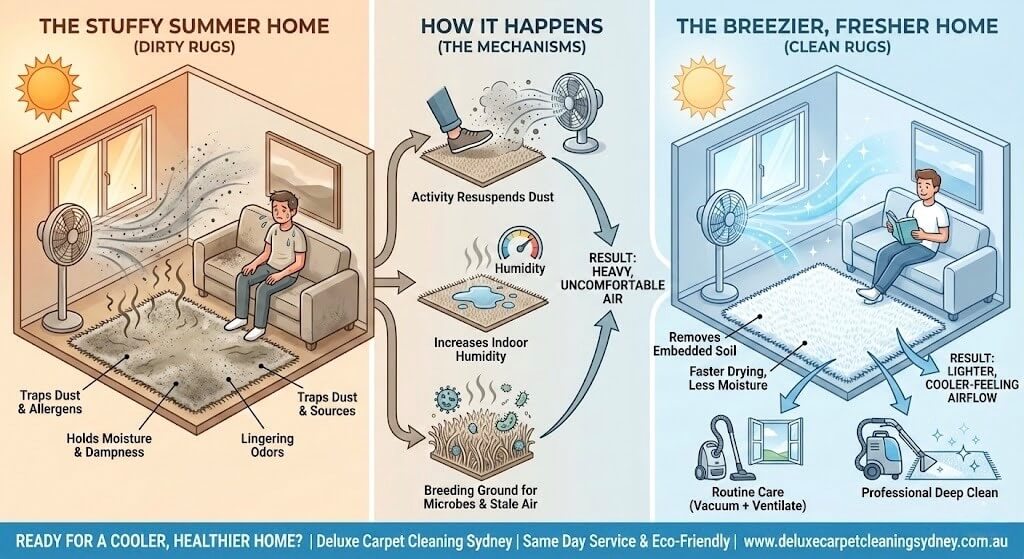
A fan doesn’t lower the air temperature. It cools your body by increasing air speed at the skin, which improves heat loss through convection and sweat evaporation.
If that moving air carries dust or a musty smell, the “breeze” can feel scratchy rather than fresh.
Humidity and indoor comfort: why rooms feel sticky
Humidity affects how well sweat can evaporate, so high humidity often feels warmer and more tiring.
Ventilation usually reduces indoor moisture, and very damp conditions are associated with greater microbial growth and higher dust mite levels.
Rugs can hold on to moisture from wet shoes, spills, and rooms that don’t dry properly, especially if the rug sits on an underlay that traps air.
Rugs can resuspend dust into the breathing zone
Rugs trap grit and fine particles. The problem starts when movement puts some of that back into the air. Studies have measured particle resuspension from carpet due to walking, and research notes that activity on carpet can resuspend more house dust than the same dust loading on hard flooring.
In summer, fans run longer, so more air passes over the rug surface. For many households, rugs and indoor air quality in summer come down to how much dust gets lifted every day, not how the rug looks from the doorway.
Cleaning routines that keep the air feeling lighter
Weekly vacuuming in high-traffic areas is a sensible baseline. The US EPA notes that a vacuum with a HEPA filter can help keep some vacuumed dust from escaping back into the room.
If dust mites are a concern, Experts warn that vacuuming can make allergens airborne for up to about 20 minutes, so opening windows or running ventilation after vacuuming can help clear the air.
Also, dry wet patches quickly and don’t leave a damp rug folded or bunched up.
When professional cleaning makes sense in the heat
A vacuum can’t always shift embedded soil, skin oils and old spills that keep odours hanging around in warm weather. A thorough clean with proper extraction and drying can remove the build-up that keeps getting stirred up.
For Sydney households trying to move fast, Deluxe Carpet Cleaning Sydney promotes same day carpet cleaning and states it uses eco-friendly, non-toxic products.
If you’re comparing options, the site’s 30 Sec Free Quote form makes it easier to check pricing and availability without back-and-forth.
Frequently Asked Questions:
1. Do clean rugs actually make a room feel cooler?
Clean rugs rarely change the measured room temperature. They can change perceived comfort because less dust and fewer odours get circulated when fans or air conditioning move air through the room. It’s a comfort shift many people notice. Walking on carpet can resuspend particulate matter, so removing what’s in the fibres can reduce what ends up in the air you breathe.
2. Why does my house feel stuffier when my rugs are dirty?
Dirty rugs can hold dust, skin flakes and moisture. Foot traffic and vacuuming can lift particles into the breathing zone, and humid weather makes smells more noticeable. Ventilation usually lowers indoor moisture, but it doesn’t remove what’s trapped in the pile.
3. How often should I clean rugs during summer or heat waves?
Vacuum weekly where people walk most, and treat spills straight away. If allergies are an issue, a HEPA-filter vacuum can help reduce dust escaping back into the room. Because vacuuming can temporarily increase airborne allergens, air the space after cleaning, especially bedrooms and living areas.
4. What’s the best rug cleaning method for hot and humid weather?
It depends on the rug fibre, dye stability and how quickly it can dry. In humid weather, the priority is effective soil removal without leaving excess moisture behind, followed by proper drying with airflow. Keeping indoor moisture lower also helps limit dust mite growth.
5. How long does it take for a professionally cleaned rug to dry in summer?
Drying time varies with thickness, fibre type, airflow and indoor humidity. Higher humidity slows evaporation, so even in summer a rug can stay damp longer than expected. Good extraction and active drying steps matter, and your cleaner should be able to give a realistic range for your rug and room.
30 Sec Free Quote
Testimonials
Follow us:


