



Go Green, Get Clean: Why Pet-Safe Carpet Cleaning is a Must for 2026
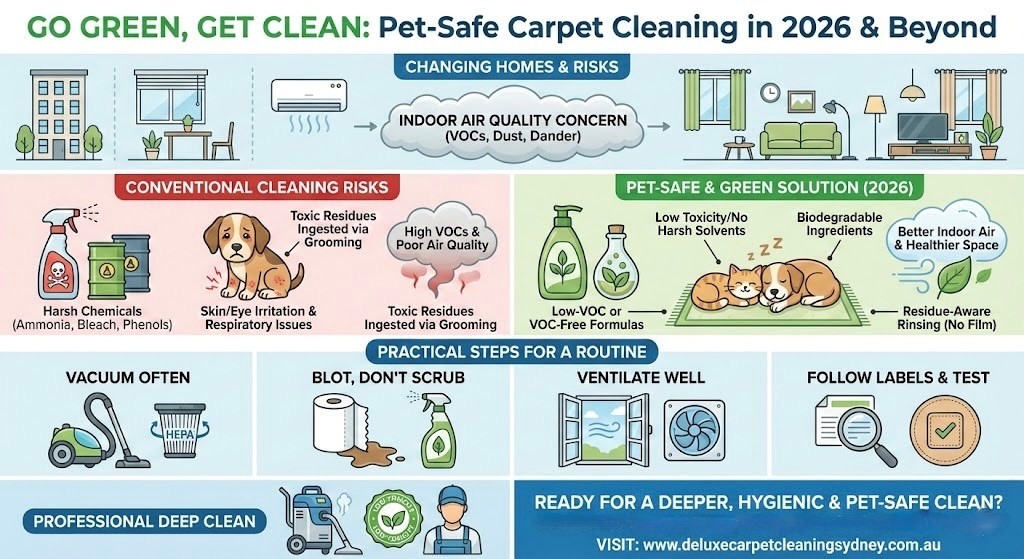
Homes are changing in the recent times. Many of us live in smaller spaces with closed-up windows, air-conditioning running, and pets sleeping on the carpet rather than in the backyard. At the same time, government advice is drawing more attention to indoor air quality, including the impact of volatile organic compounds (VOCs), dust and pet dander on respiratory health.
In that context, how we clean our carpets is no longer a minor detail. For households with pets, choosing pet-safe, eco-friendly methods is about protecting both animal health and the environment, while still keeping the place looking presentable.
Why conventional carpet cleaning can be risky for pets
- Traditional spot removers and detergents often rely on ingredients such as ammonia, chlorine bleach, phenols, strong solvents and heavy synthetic fragrances. These substances can irritate pets’ skin and eyes, affect breathing and, in higher exposures, damage organs.
- Experts recommend avoiding products with harsh chemicals and strong perfumes, especially on floors and fabrics that animals touch and lick every day.
- Animal welfare organisations warn that many general household cleaners are toxic if ingested or absorbed through the skin, advising pet owners to use pet-safe products and to keep animals off freshly cleaned surfaces until they are dry and well ventilated.
- Cats and small dogs are particularly vulnerable because of their size and their grooming habits. A dog only has to walk across a damp carpet and lick its paws to receive a dose.
- Chemical exposure is not the only concern. VOCs released from cleaning agents and some older carpet backings can contribute to poor indoor air quality, triggering headaches and respiratory irritation in both humans and animals.
What “pet-safe” and “green” should mean in 2026
Pet-safe carpet cleaning is not a vague marketing label. For 2026, it should point to several clear features:
- Low toxicity: Formulas without ammonia, chlorine bleach, phenols, or high-risk solvents, and with transparent safety data.
- Low-VOC or VOC-free: Products designed to limit fumes that linger in the air.
- Biodegradable ingredients: Plant-based surfactants and natural enzymes that break down in the environment without leaving harmful residues.
- Residue-aware cleaning: Solutions that rinse out cleanly so pets are not lying on, or licking, a chemical film.
For deeper periodic cleans, hot water extraction with eco-certified detergents remains a practical approach. When carried out with low-toxicity products and proper rinsing, methods such as carpet steam cleaning can remove built-up soil, allergens and pet odours without coating every fibre in harsh chemistry.
Practical steps for a pet-safe, eco-friendly routine
A pet-friendly approach is less about heroic one-off cleans and more about steady, sensible habits:
- Vacuum often: High-efficiency filtration helps pick up dander, hair and tracked-in soil before it bonds to the fibres.
- Blot, don’t scrub: For accidents, absorb liquid with paper towel first, then treat the area with a pet-safe enzymatic cleaner so odour-causing residues are broken down rather than masked.
- Ventilate well: Open windows or run exhaust fans while cleaning and drying carpets, which helps both with VOCs and moisture control.
- Follow labels exactly: Even “natural” products can irritate if over-concentrated. Stick to the recommended dilution and keep pets off the area until it is completely dry.
- Test small areas: Patch-testing protects both your carpet and your pet from surprises.
When to call a professional
There comes a point where the family vacuum and a home spot cleaner are not enough, especially at end-of-lease time or in a busy Sydney apartment shared with pets. Professional carpet cleaning services that advertise low-toxicity, low-VOC methods can manage deep soil, stubborn stains and long-term pet odours far more effectively than most DIY machines.
Before booking, ask direct questions:
- What surfactants and sanitisers do you use, and are they listed as pet-safe?
- Are your products certified low-VOC or compliant with recognised eco labels?
- How long should pets be kept off the carpet after cleaning?
Give your home or business the deep, hygienic clean it deserves with Deluxe Carpet Cleaning Sydney. Book a fast, reliable service today at https://deluxecarpetcleaningsydney.com.au/
Let our experienced local technicians revive your carpets, rugs and upholstery so you can breathe easier and enjoy a fresher, healthier space.
FAQs on Pet-Safe Carpet Cleaning
1. Why is it important to clean carpets?
Regular carpet cleaning removes dust, pet hair, dander, tracked-in soil and food residues that can trigger allergies, odours and staining. Clean fibres last longer, look better and support healthier indoor air, which matters in Australian homes that are often closed up for heating or cooling.
2. How to clean carpet safe for pets?
Choose low-toxicity, low-VOC cleaners labelled as safe for use around animals, and always follow the directions. Blot spills first, then use a pet-specific enzymatic product, rinse where required, ventilate the room and keep pets off the damp area until it is fully dry.
3. Is Simple Green safe for carpet cleaning?
Simple Green all-purpose and pet-specific products are marketed as non-toxic and biodegradable, with recognised safety certifications, and are generally considered safe around pets when diluted and used as directed on suitable surfaces. Pets should still be kept away from treated carpets until dry, and any ingestion warrants veterinary advice.
4. How often should carpets be cleaned in a home with pets?
Vacuum at least twice a week, or more often for heavy shedders. Treat accidents immediately. As a guide, schedule a professional deep clean every 6–12 months in a typical pet household, and more often if you have multiple animals, allergies or strict lease inspection requirements.
5. What ingredients should I avoid in carpet cleaners for pets?
Steer clear of products with ammonia, chlorine bleach, phenol-based disinfectants, high-solvent formulas and strong synthetic fragrances, all of which can irritate pets’ skin and airways or cause illness if ingested. Look for low-VOC, pet-labelled options instead, and use even “natural” cleaners with care and good ventilation.
30 Sec Free Quote
Testimonials
Follow us:


